
Last updated: November 2026
A strong freelance portfolio is the fastest way to win clients in Europe. European businesses are careful buyers: before they hire a freelancer, they want proof that you understand their market, deliver on time and handle their data responsibly. A good portfolio answers all of that before the first call.
In this guide you’ll learn what European clients look for, how to structure a freelance portfolio that builds trust, how to write case studies with real results, and the small details that make clients in Germany, the Netherlands, France and beyond say yes.
Why your freelance portfolio matters more in Europe
Many European companies, especially small and medium-sized businesses, prefer low-risk decisions. They compare several freelancers, read everything and value clear facts over big promises. That means your portfolio has to do three jobs:
- Prove skill: show real work, not just a list of services.
- Prove reliability: show process, timelines and results.
- Prove professionalism: clear contact details, transparent terms and respect for privacy rules.
If you want to work in Germany, read our guide to the digital skills that get you hired in Germany and our guide on working as a social media manager in Europe.
How to structure a freelance portfolio that builds trust
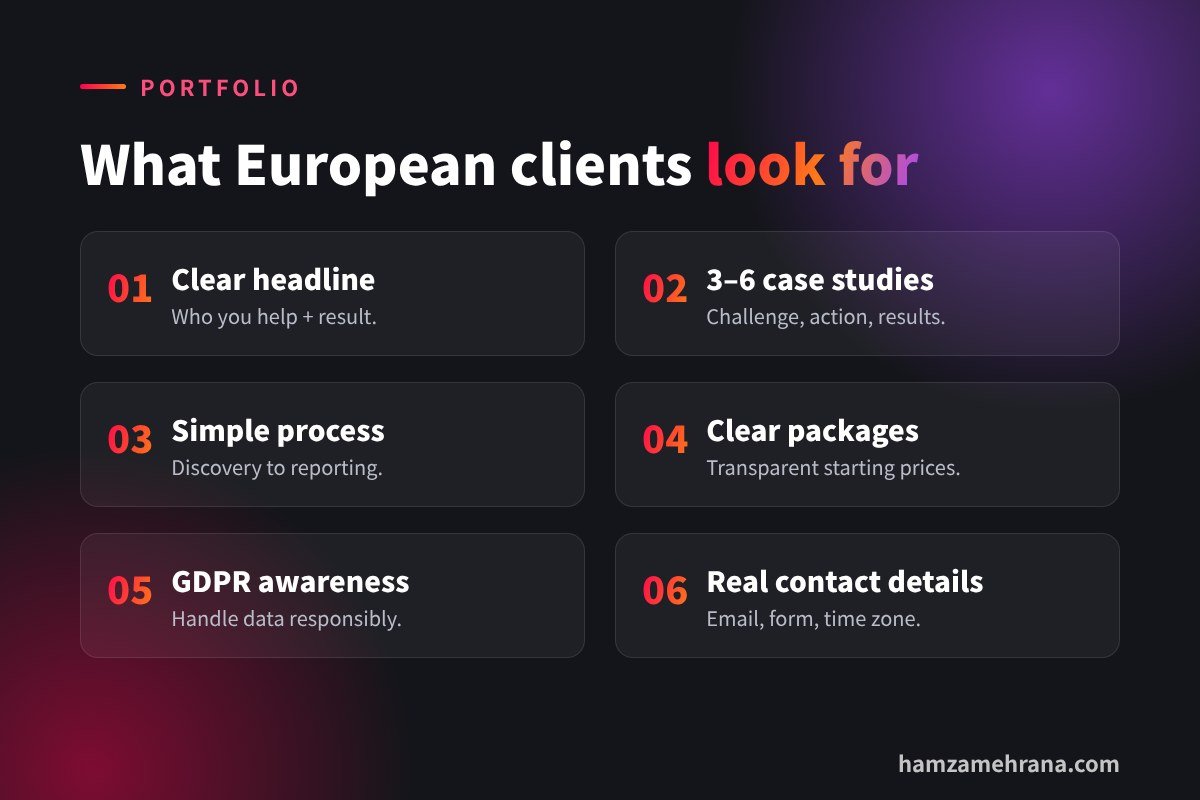
1. A clear headline
Say who you help and what result you deliver in one sentence, for example: “I help e-commerce brands in Europe turn Instagram into sales.” Avoid vague titles like “creative professional”.
2. 3–6 focused case studies
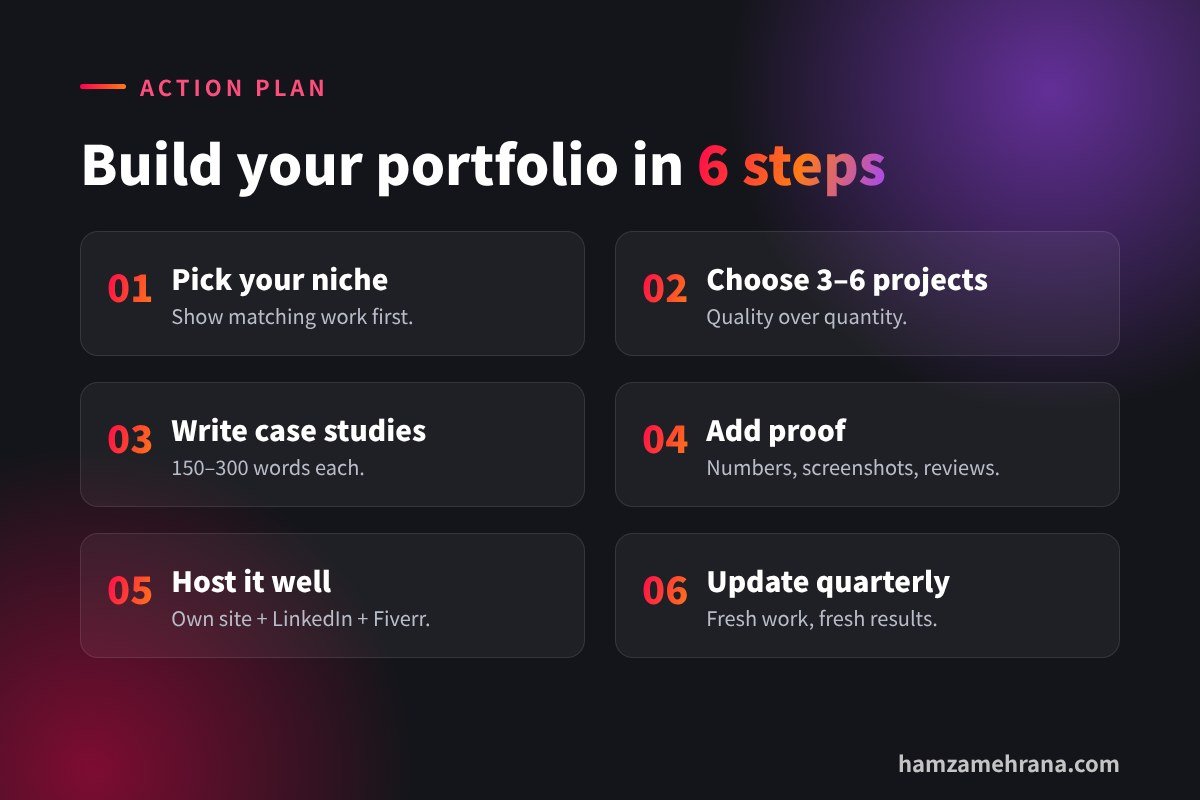
Quality beats quantity. Choose projects that match the clients you want. If you want restaurant clients, show restaurant work first.
3. A simple process section
European clients like to know what happens after they say yes. Show 4–5 steps: discovery, plan, creation, review and reporting.
4. Services and how to start
List what you offer and how clients can begin, whether that’s a call, a proposal or a fixed package on a platform like Fiverr.
5. Real contact details
Add a professional email address and a clear way to reach you. A contact page with a short form or booking link reduces friction.
How to write case studies European clients love
A case study turns a pretty design into proof. Use this simple structure for each project in your freelance portfolio:
- Client and context: industry, country and goal (you can anonymise the brand name if needed).
- Challenge: what wasn’t working before.
- What you did: strategy, content, tools and timeline.
- Results: numbers such as reach, leads, sales or time saved. Only use numbers you can back up.
- Visuals: before/after screenshots, posts, ads or videos.
Short case studies of 150–300 words are enough. Busy decision-makers skim, so use headings and bullet points.
Trust signals that matter in Europe
- Data protection awareness: mention how you handle client data and logins. The European Commission’s data protection guidance for businesses explains the GDPR basics every freelancer should know.
- Clear pricing or packages: transparent starting prices or packages reduce back-and-forth.
- Languages: say which languages you work in. English is often fine, but a local language is a bonus.
- Time zone and availability: mention your working hours in CET or another European time zone if you can.
- Professional CV: a short, structured CV such as one made with the free Europass CV builder helps when clients or agencies ask for one.
- Reviews: link to genuine reviews on platforms like Fiverr or LinkedIn recommendations. Never invent testimonials.
Note: rules about invoicing, taxes and data protection depend on your country and situation. This is general information, not legal or tax advice.
Where to host your freelance portfolio
- Your own website: the most professional option and great for Google search. See how I present my portfolio.
- Behance or Dribbble: good for designers to get discovered.
- LinkedIn Featured section: perfect for B2B clients who check your profile first.
- Freelance platforms: add portfolio items to your Fiverr or Upwork profile so buyers see proof before ordering. Read how to get your first Fiverr order.
Common freelance portfolio mistakes
- Showing everything: 40 random designs confuse clients. Curate.
- No results: pretty visuals without outcomes look like a hobby.
- Outdated work: refresh your portfolio every few months.
- No call to action: every page should tell clients what to do next.
- Using client work without permission: ask first, or anonymise it.
Key takeaways
- A freelance portfolio for European clients must prove skill, reliability and professionalism.
- Use 3–6 focused case studies with real, verifiable results.
- Add a clear process, services and contact details.
- Show GDPR awareness, languages and time zone.
- Host it on your own website and link it everywhere.
Frequently asked questions
How many projects should a freelance portfolio have?
Three to six strong case studies are usually enough. Focus on projects that match the clients you want to attract.
Can I build a freelance portfolio without clients?
Yes. Create sample projects for real local businesses, a friend’s shop or your own brand, and label them clearly as concept or personal work.
Do European clients prefer English or local languages?
Many international companies work in English, but local businesses often prefer their own language. Showing at least basic local-language skills is a strong bonus.
Should I show prices in my portfolio?
Showing starting prices or packages saves time and builds trust, but you can also invite clients to request a custom quote.
Conclusion
A trustworthy freelance portfolio is your best salesperson in Europe. Curate your best work, turn projects into short case studies with real results, show your process and professionalism, and make it easy to contact you.
Want to see a real example? Explore my portfolio, check my services or hire me as your social media manager on Fiverr.
Written by Hamza Mehrana — Social Media Manager & Content Creator. Need help growing your brand? Let’s talk.